
How to Determine the Right Amount of Storage for Your Belongings
Whether you’re moving home, decluttering, renovating, or storing business stock, one of the most common questions people ask is: how much storage do I need?
Choosing the right storage unit size can save you money while ensuring you have enough room for your belongings. Too small, and you may struggle to fit everything in. Too large, and you could end up paying for space you don’t use.
This guide will help you calculate the ideal amount of storage based on your needs, using a practical storage unit size guide and simple storage space calculator tips.
Jump to Section
- Why Choosing the Right Storage Unit Size Matters
- Start by Creating an Inventory
- Storage Unit Size Guide
- How Much Storage Do I Need for My Home?
- Storage for Home Renovations
- Business Storage Requirements
- Tips for Maximising Storage Space
- Not Sure Which Container Size You Need?
- Finding the Perfect Storage Space
- FAQ
Why Choosing the Right Storage Unit Size Matters
Selecting the correct storage unit offers several benefits:
- Avoid paying for unnecessary space
- Make it easier to organise and access your belongings
- Reduce the risk of damage caused by overcrowding
- Ensure you can accommodate future storage needs
Before choosing a unit, it’s important to understand exactly what you plan to store.
Start by Creating an Inventory
The first step in determining how much storage you need is to make a list of everything you intend to store.
For household storage, consider:
- Furniture
- Appliances
- Boxes of belongings
- Seasonal items
- Garden equipment
- Sports gear
For business storage, consider:
- Stock and inventory
- Office furniture
- Documents and archives
- Tools and equipment
- Marketing materials
Creating an inventory provides a clear picture of the volume of items you need to accommodate.
Storage Unit Size Guide
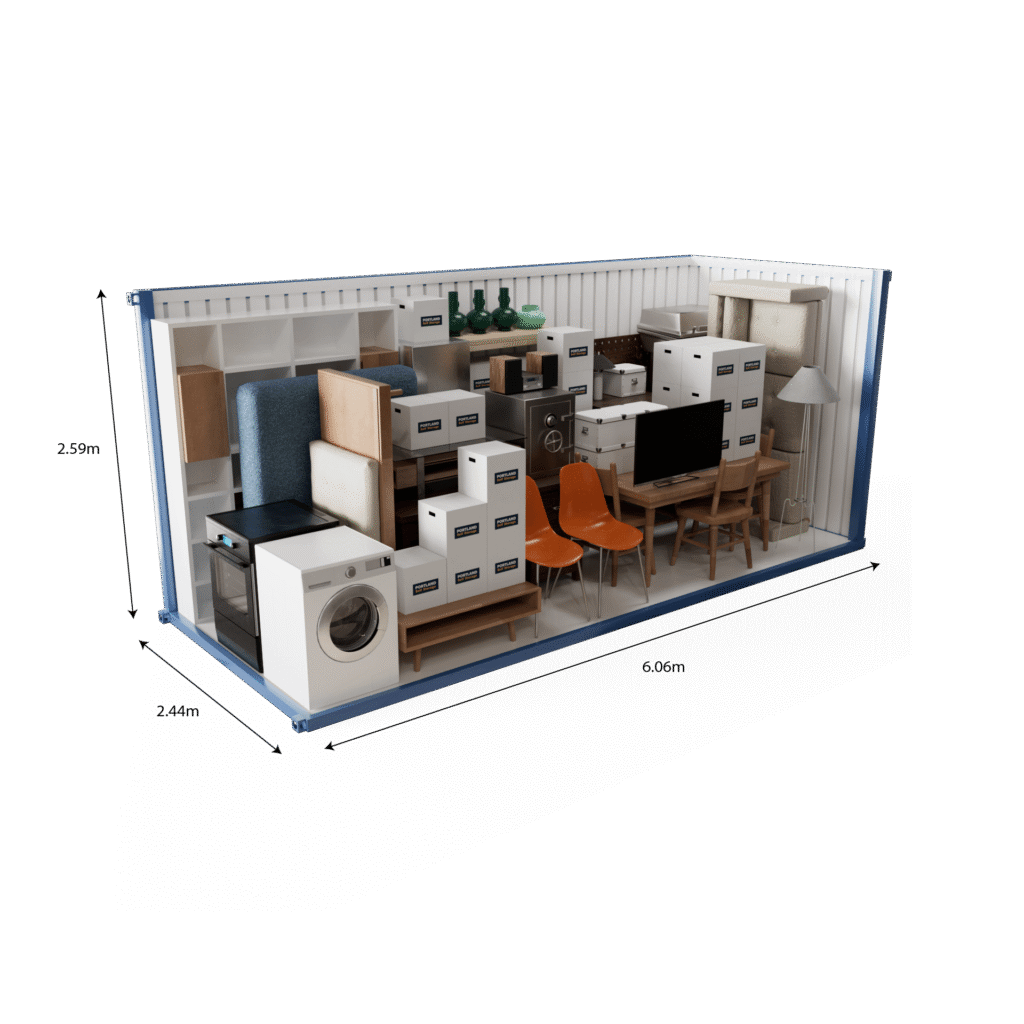
At Portland Self Storage, we offer two container sizes designed to accommodate a wide range of household and business storage requirements.
| Container Size | Suitable For |
| 10ft Container (80 sqft) | Contents of a 1-2 bedroom house, flat or apartment, furniture, household items, seasonal belongings, student storage, and small business stock. |
| 20ft Container (160 sqft) | Contents of a 3-4 bedroom house, larger home moves, renovation projects, office furniture, and substantial business inventory. |
Remember that careful stacking and efficient packing can significantly increase the amount you can store.

How Much Storage Do I Need for My Home?
If you’re considering storage tax tips to ensure compliance and maximise deductions, keep the following in mind:
1-2 Bedroom House or Flat
A 10ft container is typically sufficient for storing the contents of a smaller property, including furniture, appliances, and boxed belongings.
3-4 Bedroom House
A 20ft container is generally the best option for larger family homes, providing enough space for furniture, household goods, and personal possessions.
5 Bedroom House or Larger
If you’re moving from a larger property or have a significant amount of furniture and belongings, we recommend two or more 20ft containers. Our team can help assess your requirements and recommend the most suitable storage solution.
Storage for Home Renovations
If you’re renovating your home, storage can help protect furniture and valuables from dust, damage, and disruption.
Common items stored during renovations include:
- Sofas and armchairs
- Dining furniture
- Electronics
- Artwork and ornaments
- Flooring materials
- Kitchen appliances
For most room renovations, a 10ft storage unit is often sufficient.
Business Storage Requirements
Businesses often require storage for:
- Excess stock
- Seasonal inventory
- Tools and equipment
- Marketing materials
- Office furniture
- Archive documents
Many small businesses find a 10ft container provides ample space, while larger operations may benefit from a 20ft container or multiple containers depending on inventory levels.

Tips for Maximising Storage Space
Regardless of the unit size you choose, smart packing can help maximise available space.
Use Uniform Boxes
Boxes of similar sizes stack more efficiently and safely.
Disassemble Furniture
Taking apart beds, tables, and shelving units can significantly reduce the space required.
Store Vertically
Make use of the full height of the storage unit whenever possible.
Label Everything Clearly
Labelling boxes helps you find items quickly without unpacking the entire unit.
Place Frequently Used Items Near the Front
This makes access easier and reduces disruption.
Not Sure Which Container Size You Need?
If you’re still wondering “how much storage do I need?”, our experienced team can help. Simply provide an overview of the items you plan to store, and we’ll recommend whether a 10ft container, 20ft container, or multiple containers would be the best fit for your requirements.
Don't Worry If Your Storage Requirements Change
One of the biggest concerns when choosing storage is getting the size wrong. You might underestimate how much space you need, or discover that you’ve reserved more storage than necessary once you start packing.
The good news is that with Portland Self Storage, there’s no need to stress.
If your storage requirements change, our team can help you move to a different container size, subject to availability. Whether you need to upgrade from a 10ft container to a 20ft container, reduce your storage space, or add additional containers as your needs grow, we’ll work with you to find the most suitable solution.
This flexibility is particularly useful if you’re:
- Moving house and unsure how much you’ll need to store
- Renovating your home in stages
- Growing your business inventory
- Decluttering over time
- Storing items during a life change such as downsizing or relocating
Rather than worrying about choosing the perfect amount of storage from day one, you can have peace of mind knowing that your storage solution can adapt as your circumstances change.
Finding the Perfect Storage Space
Choosing the right storage unit doesn’t have to be complicated. By creating an inventory, estimating the space your belongings require, and using a reliable storage unit size guide, you can confidently select a unit that meets your needs without paying for unnecessary space.
Whether you need short-term storage during a move or long-term business storage, taking the time to assess your requirements will help ensure a smooth and cost-effective storage experience.
📞 Call: 0114 400 0114
📧 Email: info@portlandselfstorage.co.uk
🌐 Book Online Today
FAQ
What size storage unit do I need for a one-bedroom flat?
An 10ft container (80 sqft) storage unit is usually sufficient for the contents of a one-bedroom flat, including furniture, appliances, and boxes.
What size container do I need for a 4-bedroom house?
A 20ft container (160 sqft) is typically suitable for storing the contents of a 3-4 bedroom house. If you have a particularly large amount of furniture or belongings, you may require additional storage space.
What size container do I need for a 5-bedroom house?
For most 5-bedroom properties, we recommend two 20ft containers or more, depending on the volume of items being stored. Our team can help assess your requirements before booking.
How do I calculate how much storage space I need?
Start by creating an inventory of your belongings, estimating the number of boxes and large furniture items, and using a storage unit size guide to determine the most suitable unit.
Is it better to get a larger storage unit?
If you expect to add more items or require regular access, a slightly larger unit can provide greater flexibility and organisation.
Can I store furniture and appliances together?
Yes. Most storage units are suitable for storing furniture, appliances, boxes, and household belongings together, provided they are packed and protected properly.
What if I choose the wrong storage container size?
Don’t worry. At Portland Self Storage, we understand that it can be difficult to estimate exactly how much space you’ll need. If you find that you’ve underestimated or overestimated your requirements, we can help you move to a different container size or arrange additional containers, subject to availability.